Katmai vs. Lake Clark for Bear Viewing: How to Choose
This is one of the most common questions I get, and it's a good one. Katmai and Lake Clark are both excellent places to watch brown bears, neighbors in southwest Alaska, and a lot of people planning one Alaska bear trip end up choosing between them. They're different experiences, though, and the right pick depends on what you're actually after. Here's the comparison from someone who lives and works in Katmai country, and I'll tell you where Lake Clark wins, too.
The one-line version
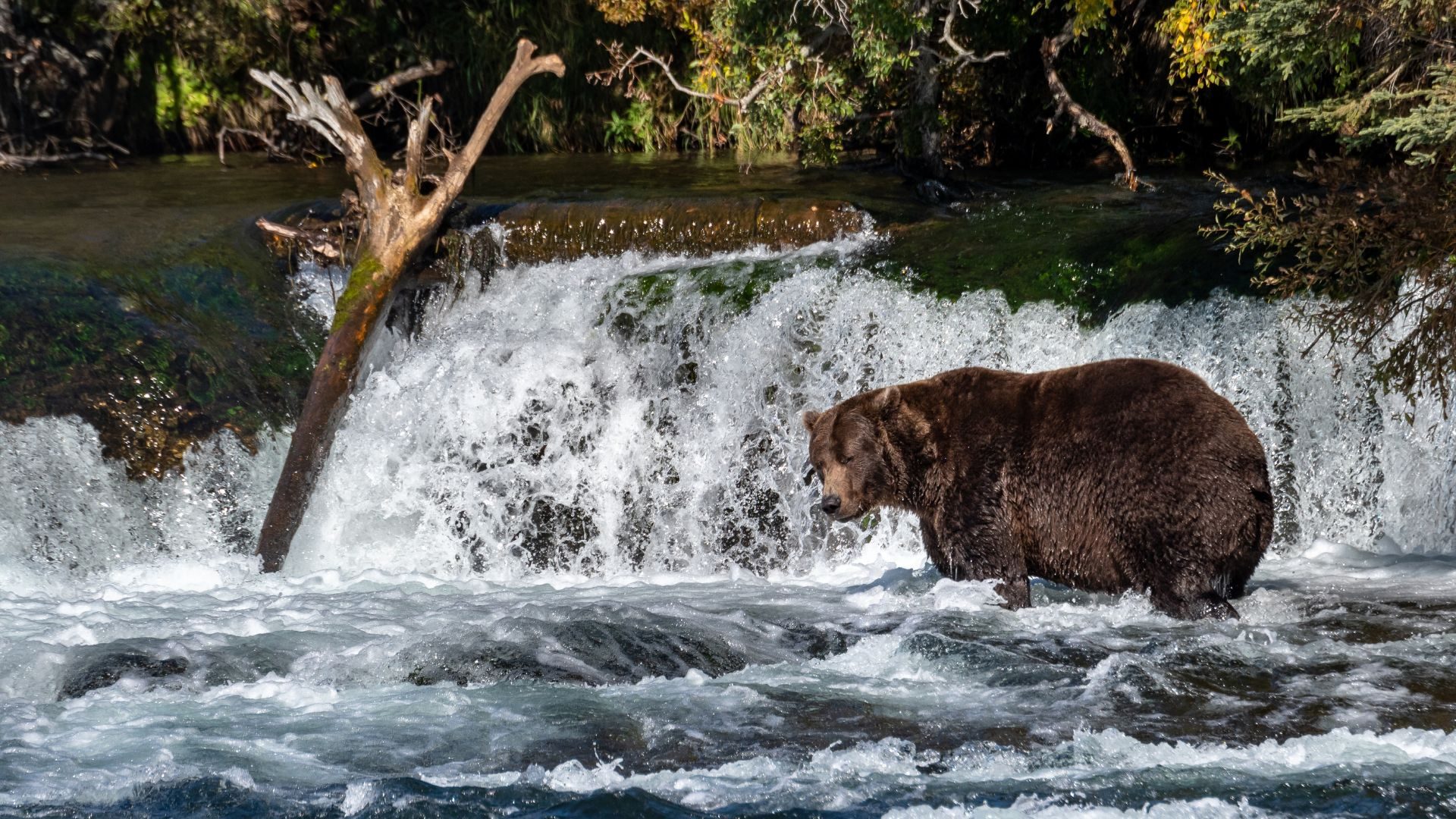
If you want the iconic shot, a bear standing at a waterfall snatching a salmon out of the air, that's Brooks Falls in Katmai, and there's no real substitute. If you want to walk through open meadows and beaches with bears nearby, in big mountain-and-glacier scenery with far fewer people, that's Lake Clark. Pick based on which picture is in your head.
Katmai vs Lake Clark, side by side
What Katmai (Brooks Falls) is
Brooks Falls is the most famous bear-viewing spot in North America, and it earns it. During the salmon run you'll see a lot of bears working the falls, fishing right below the elevated platforms you watch from. It's about as reliable a place to actually see bears as exists, in season, you're not hoping, you're watching.
The tradeoffs are crowds and structure, and the crowds are mostly a July thing. The elevated platforms give you a fixed angle, and in peak July they can see hundreds of visitors a day with time limits during busy stretches. But that eases off fast: by the middle of August the crowds drop sharply and stay relatively small through September, when you'll often have real room. And you're not confined to the platforms. They're where most people feel safest, but you can also walk the trails, the beach, and the lower river around Brooks Camp at ground level, in bear country, on foot. Brooks Camp also has real services on the ground, a lodge, dining, a ranger station, a store, which is more than you'll find at most Lake Clark sites. Cost tends to run a little lower than Lake Clark, simply because operators can move more visitors in a day.
What Lake Clark is
Lake Clark is the quieter, more intimate one, and I won't pretend otherwise. Instead of platforms, small guided groups move with the bears on foot through coastal sedge meadows and along the beaches of Cook Inlet, spots like Chinitna Bay and Silver Salmon Creek. The bears there forage in salt marshes, dig clams, and fish shallow streams, so you're often much closer to ground level and can reposition for the shot you want. There are far fewer people, and the scenery, glaciers, volcanoes, big open water, is hard to beat. A lot of photographers prefer it for exactly those reasons.
What you generally don't get at Lake Clark is the waterfall. The bear-at-the-waterfall image is a Brooks thing. Lake Clark is bears in meadows and on beaches, beautiful, just different.
Logistics
Neither has a road in. Lake Clark is closer to Anchorage, about 70 miles southwest, and a lot of people do it as a day tour from Anchorage or by boat from Homer. Katmai takes a little more doing: you fly from Anchorage to King Salmon, then cross to Brooks by floatplane or water taxi. That extra step is exactly why a Katmai trip rewards giving it more than a single day, and why basing in King Salmon makes sense if the falls are what you came for.
So which one?
Go to Lake Clark if you want the intimate, walk-with-them, fewer-crowds experience and the mountain scenery, and you're fine without the waterfall shot. Go to Katmai if the falls and the bears catching salmon are the image you've been chasing, and, in peak July, you don't mind sharing a platform to get it. Plenty of people who can swing it do both, because they really are two different trips.
I run things on the Katmai side, in King Salmon, so if Brooks Falls is the one calling you, that's what we help with. The full Brooks Falls guide covers how to get there and what it costs, and our rates page will price your dates.
Planning the whole trip? See our complete guide to King Salmon, Alaska.